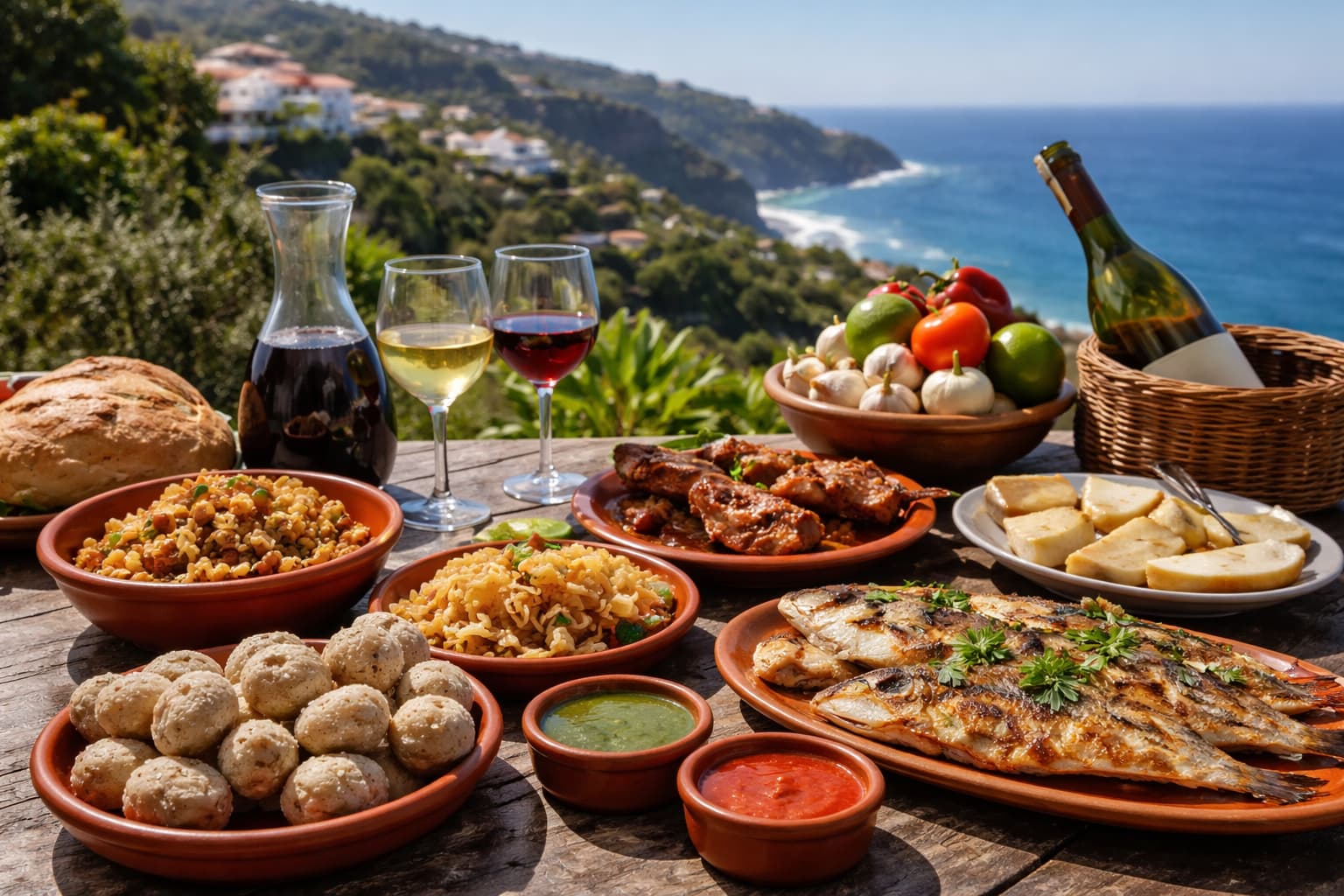
This is my traveler-style list of the top 10 places to eat in Portugal—not a sterile “best of” written from behind a desk, but the kind of places you build a day around. I’ll tell you what they’re great at, why they’re worth it, and the honest minus points too (because even the best spots have quirks, and knowing them is half the fun).
I’m also going to weave in something practical: Portugal is one of the easiest countries in Europe for a food road trip, and the right car can turn “we’ll see what happens” into “we just found the best lunch of the trip.”
Let’s eat.
1) Pastéis de Belém (Lisbon) – the pastry pilgrimage that actually delivers
If you eat only one sweet thing in Portugal (and I say this knowing it’s an impossible promise), make it here. Pastéis de Belém is the original: the kind of place where you stand in line and somehow don’t resent it because everyone around you has the same look in their eyes – hope, hunger, and a very specific craving for flaky pastry.
Their story is part of Lisbon’s culinary mythology. According to their own history, they began selling the original Pastéis de Belém in 1837, following an old recipe connected to the nearby Jerónimos Monastery. The key point isn’t just the date – it’s the vibe: a real institution that has managed to stay an institution.
Why it’s great: it’s not just that they’re warm and crisp and creamy. It’s that they taste like the platonic ideal of what a pastel should be – balanced, not too sweet, with that glossy top that begs for cinnamon and powdered sugar. And yes, you should eat at least one standing outside like a happy cliché.
The downside: crowds. This is not your quiet hidden bakery moment. Go early, or treat it like a snack stop rather than a peaceful café experience.
2) Cervejaria Ramiro (Lisbon) – seafood theater in the best possible way
If Lisbon had a seafood temple, this would be one of the loudest, happiest ones.
Cervejaria Ramiro is the kind of place where you don’t ease into the meal. You dive. People come here for shellfish that tastes like it just had a short conversation with the ocean. It’s famous enough that it has become a Lisbon rite of passage, and it consistently pulls huge attention and traveler reviews.
Why it’s great: the experience feels like a celebration even if you’re just there on a random Tuesday. You order one thing, then another, then “maybe one more,” and suddenly the table looks like the aftermath of a very delicious tide. If you love seafood, this is one of those meals you’ll still be talking about when you’re home eating sad desk salads.
The downside: waiting is common, and prices can add up quickly if you get excited (and you will get excited). It’s worth it, but it’s not the cheapest dinner in Lisbon – think of it as a planned splurge.
3) Taberna da Rua das Flores (Lisbon) – small plates, big flavor, and the art of waiting
This is Lisbon in “foodie mode,” without feeling like a sterile fine-dining lab.
Taberna da Rua das Flores is known for creative, flavor-packed dishes that are meant to be shared. The appeal is that it feels both casual and carefully made – like someone took traditional Portuguese ingredients and decided to make them flirt with modern ideas. It’s also popular enough that people regularly mention long waits.
Why it’s great: it’s one of those places where you order a few plates, everyone tastes everything, and the table becomes a conversation. You’re not just “having dinner,” you’re building a little edible story. It’s very easy to leave here feeling like Lisbon is the best city in Europe for dinner right now.
The downside: the line. If you hate waiting, you need a plan – go at off hours, or accept that patience is part of the price. Also, it’s small, so it can feel tight when it’s packed.
4) O Velho Eurico (Lisbon) – the tavern vibe you daydream about later
O Velho Eurico feels like someone captured “Lisbon tavern energy” in a bottle and poured it into a small, warm room full of life. It sits in a historic part of the city, and it’s often described as that true, welcoming tavern experience travelers chase.
Why it’s great: it’s comforting in the way that matters when you’ve been walking all day. The dishes feel grounded – real food, not performative food. This is where you go when you want to feel like you’re eating with Lisbon, not just in Lisbon.
The downside: it’s small and popular, which means you may need to time it well, and the intimacy can feel crowded when the city is busy. But honestly, that’s part of the charm – Portugal doesn’t always feed you in silence.
5) Café Santiago (Porto) – francesinha legend status (and a nap afterwards)
Porto has many opinions about where to eat a francesinha, and people defend their favorite like it’s a sports team. Café Santiago is one of the names that comes up again and again, and it’s widely known for this gloriously excessive sandwich situation.
Why it’s great: it delivers that classic Porto experience – rich sauce, hearty layers, the kind of meal that feels like a dare. It’s not subtle, but it’s not supposed to be. A francesinha is Porto saying, “We’re not here to be delicate.”
The downside: it can be busy, and during rush hours you may feel the pace. Also: this is not a “light lunch then explore immediately” kind of place. Eat here and plan your next hour accordingly. Porto’s hills don’t care that you’re full.
6) Casa Guedes (Porto) – the sandwich that proves simplicity can be iconic
Casa Guedes is famous for its pork sandwich – so famous that even people who claim they “don’t really do sandwiches” end up talking about it like it was a spiritual experience. The house itself highlights multiple locations in Porto now, but the core idea remains: a classic Porto bite that’s satisfying, fast, and deeply local.
Why it’s great: it’s one of the best examples of Portugal’s talent for taking humble food and making it feel like it belongs in your top ten trip memories. You don’t need a long meal here. You just need hunger and a willingness to accept that your “quick snack” turned into a moment.
The downside: it’s popular, so it can get crowded, and if you’re expecting a slow sit-down restaurant vibe, that’s not really the point. This is about the sandwich. Let it be about the sandwich.
7) Mercado do Bolhão (Porto) – when you want Porto’s food scene in one walk
Markets are where you understand a place. Not in a museum way, but in a real way: what people buy, what they cook, what smells like daily life.
Mercado do Bolhão is one of Porto’s most iconic markets, and it also has places to eat inside – ranging from casual bites to more sit-down options, according to its own restaurant listing.
Why it’s great: it’s a choose-your-own-adventure. You can graze, try different things, sit down when you’re ready, then go back to wandering. If you’re traveling with picky eaters or a group, markets are the ultimate peace treaty. Everyone can find something.
The downside: it can be busy, and some of the best moments happen when you’re not rushing. If you’re trying to “do it fast,” you’ll miss the charm. Go when you can wander without checking your watch every five minutes.
Road trip interlude (and the easiest way to eat well across Portugal)
Here’s a Portugal truth: if you build your trip around food, you’ll eventually want to leave the cities.
Lisbon and Porto are amazing, but some of Portugal’s most memorable meals happen in smaller towns, coastal villages, and inland places where the menu is built around what the region does best. That’s where having a car becomes less of a “travel luxury” and more of a practical superpower – you can chase lunch, detour for viewpoints, and stop in a place because someone told you “the stew there is unreal.”
If you’re planning even a mini road trip – Lisbon to Porto with Coimbra in between, or Porto down through Alentejo toward the Algarve – do yourself a favor and compare rental prices before you book.
👉 Compare car rental deals here.
That one step can save you money, and it makes it easier to choose pickup spots and dates that match the route you’re building.
8) Zé Manel dos Ossos (Coimbra) – the cozy chaos of a true local icon
Coimbra is often treated as a “stop between Lisbon and Porto,” but it deserves better – especially if you like eating in places that feel like they’ve been loved for decades.
Zé Manel dos Ossos is one of Coimbra’s most talked-about restaurants, known for hearty traditional dishes and a vibe that feels lived-in. It’s also small and popular, which means waiting is part of the deal.
Why it’s great: it feels like Coimbra. It’s not trying to be sleek. It’s trying to feed you properly. This is the kind of place where you end up talking to strangers in line, then sitting down and feeling like you’ve found the “real” Portugal that people romanticize.
The downside: limited space and the occasional inconsistency people mention – when a place becomes famous, expectations become intense. But if you come with a traveler’s attitude (open, patient, curious), it’s one of those meals that anchors a whole day.
9) Restaurante Fialho (Évora, Alentejo) – classic Alentejo hospitality with serious depth
Alentejo is Portugal’s slow-breathing region: wide landscapes, cork trees, long lunches, and food that tastes like it grew up with time.
Restaurante Fialho in Évora is an established name tied to regional cuisine and hospitality, with a long-running reputation and a deep connection to Alentejo’s flavors and wine culture.
Why it’s great: it’s the kind of place that makes you understand why Alentejo food is so beloved. There’s a confidence to it – rich flavors, proper service, and the sense that you’re stepping into a tradition that didn’t start when tourism did.
The downside: it’s more of a “proper meal” experience than a casual snack stop, which means it’s not built for speed or ultra-budget dining. Think of it as a destination dinner in a region that rewards you for slowing down.
10) Tasca do Celso (Vila Nova de Milfontes, Alentejo coast) – the coastal detour that feels like a secret
If you’ve ever driven Portugal’s coastline and felt that pull to stop in a random town because the light looks good – this is exactly the kind of place that makes that instinct worth trusting.
Tasca do Celso in Vila Nova de Milfontes is well-known enough to rack up thousands of reviews and strong traveler interest, often praised for seafood and a warm, lively atmosphere.
Why it’s great: it feels like the reward for getting out of the obvious tourist circuit. The food fits the setting – coastal, fresh, satisfying. It’s the kind of meal that makes you want to stay one more night in the town because the dinner made the place feel special.
The downside: popularity means it can get busy, and in summer you may need to plan ahead. But honestly, that’s a good sign. Portugal doesn’t queue for bad food.
Bonus stop if you’re heading south: O Camilo (Lagos, Algarve) – a view meal, with a “know what you’re buying” warning
The Algarve is where Portugal becomes sunlit and salty, and Lagos is one of those towns that makes you want to extend your stay “just two more days.” O Camilo is a well-known restaurant in Lagos with a long-running presence and a menu rooted in Algarvian tradition.
Why it’s great: location and seafood. It’s the kind of place that pairs nicely with a coastal walk and gives you the feeling you came to the Algarve for exactly this.
The downside: when a place is famous and scenic, prices can rise, and some travelers mention feeling upsold at times – especially around fish selections. My traveler advice here is simple: ask questions, confirm prices if something is sold “by weight,” and go in aware that the view is part of what you’re paying for.
Final thoughts: how to eat your way through Portugal without overplanning
Portugal’s food scene doesn’t require perfection. It rewards curiosity.
Some of the best meals happen when you don’t chase the “best restaurant” label, but instead chase the feeling: a place that’s busy with locals, a menu that reads like the region, a smell that makes you stop walking. Lisbon and Porto give you the famous hits, but the real magic often appears in between—Coimbra, Alentejo towns, coastal detours, market lunches you didn’t schedule.
If you’re building a trip where food is a main character (as it should be), consider turning part of Portugal into a small road trip- city to city, with meal stops as your landmarks. And if you do that, don’t forget the practical piece that makes it easy:
Compare car rental options here
Because the best meal in Portugal is often the one you found when you had the freedom to pull off the road and say, “Let’s stop here.”