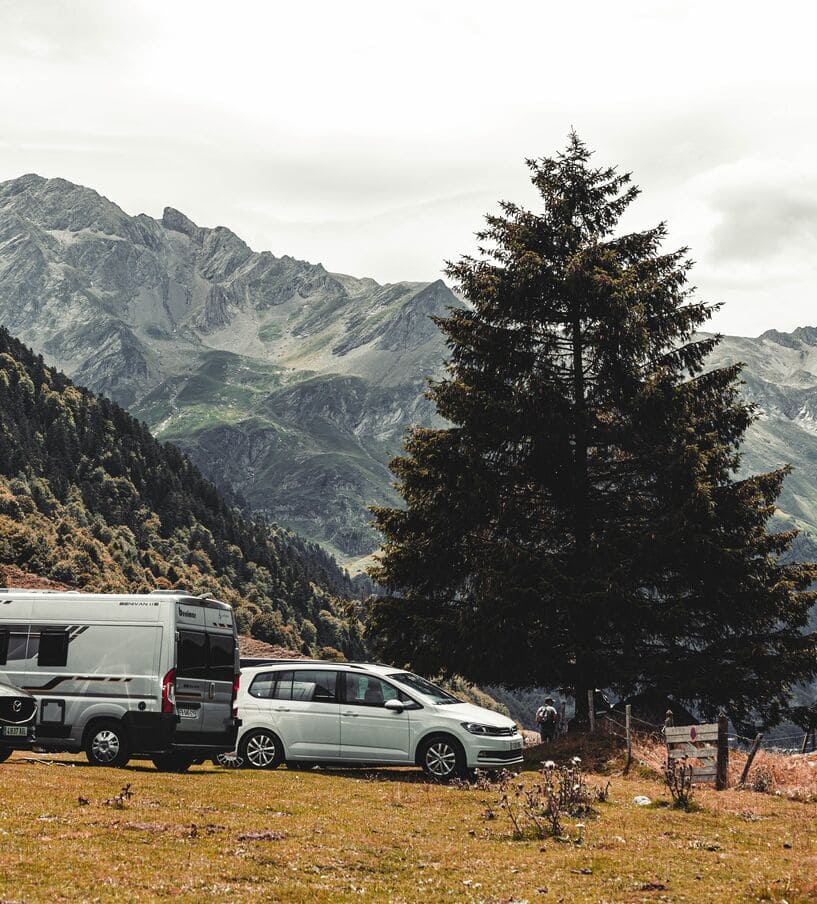
Why explore the French Alps by car?
A ski holiday does not always have to mean travelling directly from the airport to one resort and staying there for the entire trip. The French Alps cover a large area, and some of the most interesting mountain towns, ski areas and food destinations are spread across different valleys.
A rental car can be particularly useful when you want to combine several experiences in one journey. You may spend a few days skiing in Chamonix, stop in Annecy or a smaller Alpine town for local food, and then continue towards another ski area.
France has numerous well-known Alpine resorts, including Chamonix, Courchevel, Méribel, Val Thorens, Tignes and Val d’Isère. Several resorts also form large interconnected ski areas, such as Les 3 Vallées, which links Courchevel, Méribel, Les Menuires and Val Thorens.
Having a car is especially convenient if you want to explore beyond your accommodation. It gives you more flexibility to visit nearby villages, choose restaurants outside the main resort centre or plan a route through several parts of the French Alps.
Which French Alps ski resorts should you consider?
There is no single French ski resort that suits every traveller. Some destinations are better for experienced skiers, others for travellers who want a lively mountain town, a large connected ski area or a more relaxed winter holiday.
| Ski resort |
Best suited for |
Why consider it on a road trip? |
| Chamonix |
Mountain scenery, experienced skiers and an active town |
Easy to combine with Haute-Savoie, Annecy and other stops |
| Val Thorens |
High-altitude skiing and large ski areas |
Part of Les 3 Vallées and useful for exploring the Tarentaise region |
| Méribel |
A central base in Les 3 Vallées |
Good access to other resorts in the same ski area |
| Courchevel |
Skiing, restaurants and a more premium resort experience |
Easy to combine with Méribel and surrounding mountain villages |
| Tignes / Val d’Isère |
Sport-focused skiing and high-altitude terrain |
A strong choice for travellers prioritising skiing |
Chamonix – for iconic Alpine scenery
Chamonix lies at the foot of Mont Blanc and is one of the best-known mountain destinations in the French Alps. The town combines skiing and other winter activities with restaurants, shops and a lively year-round atmosphere.
It is a good option for travellers who want more than a traditional ski-resort experience. With a car, Chamonix can also become one stop in a broader Haute-Savoie itinerary rather than the only destination of the trip.
Val Thorens, Méribel and Courchevel – explore Les 3 Vallées
If the size of the ski area is one of your priorities, Les 3 Vallées is particularly attractive. The connected area includes Val Thorens, Méribel, Courchevel and several other resorts, allowing skiers to explore a large network of slopes.
Val Thorens is especially known for its high altitude, while Méribel provides a convenient central position within the ski area. Courchevel combines skiing with an extensive choice of accommodation and dining.
A rental car is less important during the actual skiing day when the resorts are connected by lifts and pistes, but it becomes useful if you want to explore towns and restaurants outside your immediate resort or continue the trip elsewhere in the Alps.
Tignes and Val d’Isère – for a ski-focused holiday
Tignes and Val d’Isère form another major connected ski area. This part of the French Alps is particularly attractive to travellers who want a holiday focused strongly on skiing and winter sports.
If Tignes or Val d’Isère is your main destination, consider combining the resort stay with stops elsewhere in the Tarentaise Valley instead of treating the drive simply as a transfer from the airport.
Where should you rent a car for the French Alps?
The best pickup location depends on your flight and the resorts you plan to visit. Airports such as Geneva and Lyon can work as starting points for different parts of the French Alps.
Geneva Airport requires a little more attention when booking a rental car. The airport has both Swiss- and French-sector rental desks. If you are arriving by plane and plan to drive directly into France, check which sector your rental company operates from and where the vehicle must be returned. Geneva Airport officially lists rental companies on both sides of the airport.
Also check the rental conditions if your route crosses an international border. A car collected in Switzerland may have different cross-border, road-fee or equipment conditions from a vehicle collected in France.
Before booking, use VerusCars to compare available car rental offers and pay attention not only to the vehicle price but also to the rental conditions, included equipment, deposit requirements, luggage capacity and pickup location.
French Alps food: what should you try?
The food is one of the reasons not to rush directly from the airport to the ski lift.
Traditional Alpine cuisine developed around filling ingredients that work particularly well in cold mountain winters. Cheese, potatoes, cured meats and local dairy products feature heavily in the cuisine of Savoie and Haute-Savoie.
Raclette
Raclette is one of the foods most associated with Alpine winter evenings. Melted raclette cheese is traditionally served with potatoes and accompaniments such as cured meats and pickles.
After a full day of skiing, it is easy to understand why this rich and simple meal has become so closely associated with winter trips to the Alps.
Tartiflette
Tartiflette combines potatoes, onions, bacon and Reblochon cheese. It has become one of the most recognisable dishes associated with Savoyard mountain cuisine.
If your trip takes you through Haute-Savoie or Savoie, it is worth trying tartiflette in the region rather than treating it simply as another dish on a ski-resort menu.
Fondue
Cheese fondue is another classic choice for a group dinner after skiing. Different recipes and cheese combinations can be found across Alpine regions, making it a good meal to try when travelling with friends or family.
Beaufort, Reblochon and other Alpine cheeses
The region is particularly rich in cheese traditions. Beaufort, Reblochon, Abondance, Tomme de Savoie and Raclette de Savoie are among the cheeses closely associated with the French Alps and Savoy.
Instead of tasting them only at a resort restaurant, travelling by car gives you the option to visit smaller towns, markets or shops specialising in regional products.
Combine skiing and food in one French Alps road trip
One advantage of travelling through the French Alps by car is that the journey itself can become part of the holiday.
For example, a winter itinerary could begin around Geneva, continue towards Chamonix, include a stop around Annecy or the Haute-Savoie region, and then continue towards the ski resorts of the Tarentaise Valley.
The exact route should depend on weather, road conditions and how much time you have. There is little benefit in trying to visit five resorts in one week if most of the holiday is spent packing luggage and driving.
A better approach is to choose one or two main ski areas and add a few food or sightseeing stops around them.
For example:
Geneva → Chamonix → Haute-Savoie food stop → Méribel or Courchevel
This type of itinerary allows you to combine skiing with local cuisine without turning the trip into a restaurant checklist. A lunch in a smaller Alpine town, a visit to a local food market or a stop for regional cheese can become part of the route between the major destinations.
What should you check when renting a car for a ski trip?
Driving in the French Alps in winter requires more preparation than a summer road trip.
Winter tyres and snow chains
In designated mountainous areas of France, winter equipment requirements apply between 1 November and 31 March. Cars must either have suitable winter tyres on all four wheels or carry approved removable anti-skid equipment such as snow chains or snow socks for at least two driven wheels.
Since November 2024, tyres marked only M+S no longer qualify as winter tyres for this requirement; the recognised winter tyre standard is the 3PMSF marking.
Do not assume that every rental vehicle automatically includes everything required for your specific route. Check the equipment when comparing offers and confirm it again when collecting the car.
Choose enough space for people and ski equipment
A compact car may be suitable for two travellers with light luggage, but a ski trip often involves bulky clothing, boots, helmets and other equipment.
If several people are travelling together, compare:
- luggage capacity;
- number of passengers;
- availability of ski racks or roof boxes;
- winter equipment;
- whether all luggage can be stored securely.
A slightly larger vehicle may be more practical than choosing the smallest rental option and discovering at the airport that the luggage does not fit.
Check parking before reaching the resort
Parking conditions vary between French ski resorts. Some accommodation includes a parking space, while other properties may rely on public or paid car parks.
Check the parking situation before departure, particularly if you plan to leave the car unused for several days while skiing.
Check cross-border conditions
This is especially important if you collect the car in Geneva or plan to combine France with Switzerland or another neighbouring country.
Rental companies can have different rules for taking vehicles across borders. Confirm the permitted countries and any conditions before paying for the reservation rather than assuming that all European rentals have identical rules.
Is renting a car worth it for a French Alps ski holiday?
It depends on the type of trip.
If you plan to stay for a week in one ski-in/ski-out resort and have no intention of exploring the surrounding area, an airport transfer may be enough.
A rental car becomes much more useful when you want to:
- visit more than one ski area;
- explore mountain towns and villages;
- stop for regional food away from the main resort;
- travel with a group and a large amount of luggage;
- create your own itinerary instead of following transfer schedules.
For that type of winter trip, car rental can turn the route through the French Alps into part of the experience rather than simply a way to reach the slopes.
Before travelling, compare rental options, check winter equipment and make sure the vehicle fits both your route and your luggage. VerusCars helps you compare car rental offers so you can choose an option that suits your French Alps trip.
Frequently Asked Questions
What are the French Alps known for?
The French Alps are known for high mountain scenery, major ski areas, winter sports and Alpine towns. The region includes internationally recognised ski destinations such as Chamonix, Courchevel, Méribel, Val Thorens, Tignes and Val d’Isère.
Is a rental car useful when skiing in the French Alps?
Yes, especially if you plan to visit several resorts, explore smaller towns or make food and sightseeing stops. If you stay entirely within one connected ski area, you may use the car much less during the skiing part of the holiday.
Do I need winter tyres in the French Alps?
In designated French mountain zones, winter equipment rules apply from 1 November to 31 March. Depending on the vehicle setup, this means approved winter tyres or carrying appropriate anti-skid equipment such as chains or snow socks. Always check the current rules and your rental vehicle before departure.
Can I rent a car at Geneva Airport and drive to the French Alps?
It is possible, but check your booking carefully. Geneva Airport has rental companies operating from both its Swiss and French sectors, and the conditions can differ. Confirm the pickup sector, cross-border conditions and required winter equipment before travelling.