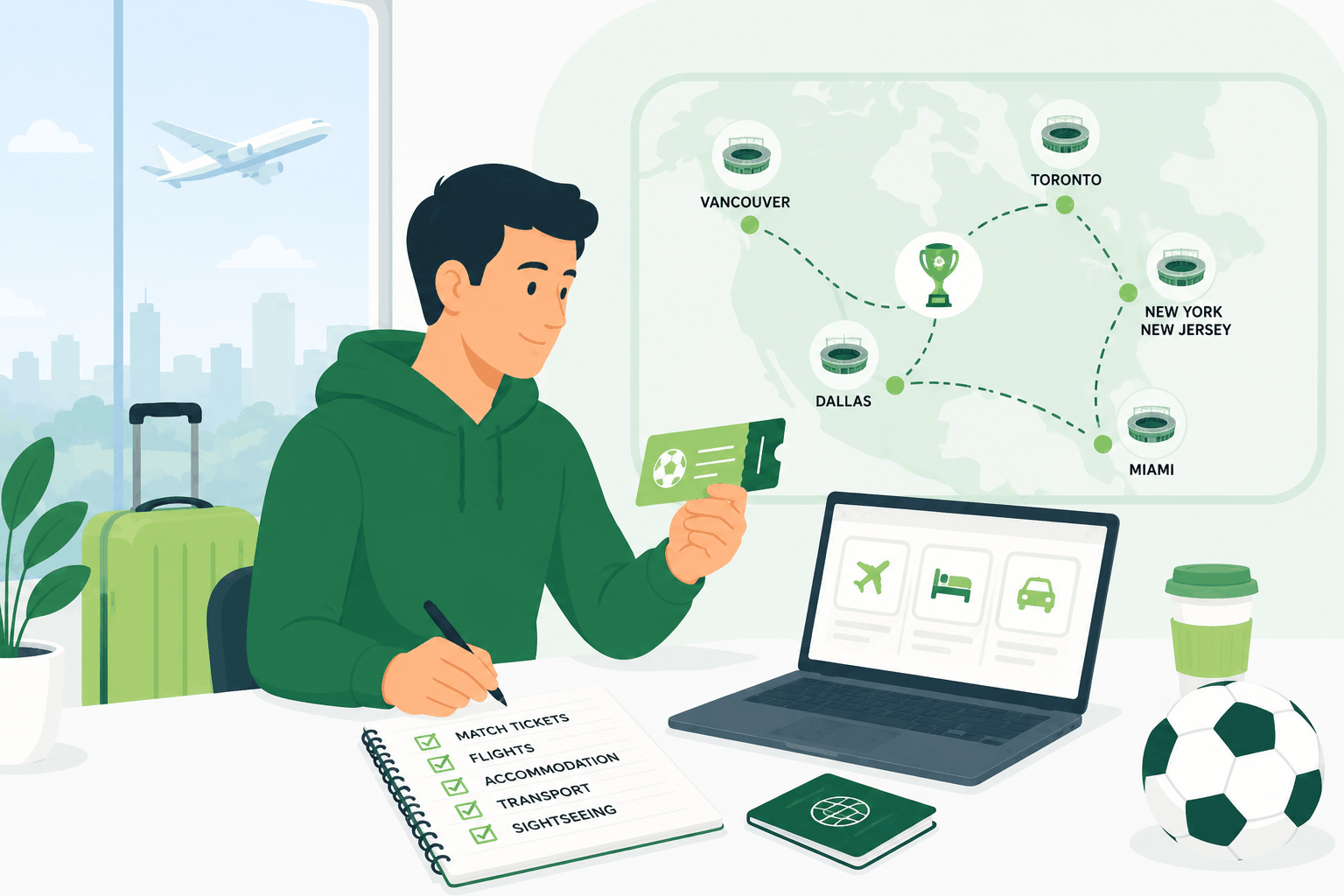
What this guide covers (and why it matters for ticket success)
This guide is designed for travelers who want clarity, not hype. You’ll find:
- How World Cup tickets typically work (phases, demand, and selection mechanics)
- A planning system that keeps your trip flexible until your matches are confirmed
- How to choose host cities for a realistic itinerary
- Accommodation and budget tactics that prevent overpaying
- Transport choices that fit matchday conditions
It’s written to help you make decisions that reduce risk: missed connections, overpriced hotels, or tickets that don’t match your travel constraints. If you implement the framework below, your trip stays adaptable until the last responsible moment – then you lock everything with confidence.
FIFA World Cup 2026 tickets: what most travelers need to know first
Tickets are not only about price—they shape your entire route
For a tournament trip, tickets define three variables that drive cost:
- Dates (which week you must travel)
- Cities (where you must be, and how often you move)
- Kickoff times (which change your transport options at night)
Your first goal is to avoid building a rigid itinerary before you have confirmed matches. Many fans do the opposite: they book non-refundable hotels, then chase tickets that fit. The stronger play is to decide your preferred regions and travel windows, keep bookings flexible, and then lock accommodation once match locations are confirmed.
Ticket demand will be intense—plan for alternatives
World Cup demand is always high. In practice, the best approach is to plan:
- Your ideal match set (A-plan)
- Your acceptable match set (B-plan)
- A “fan experience trip” that still works even if you get fewer tickets than expected (C-plan)
That way, you can still travel for the atmosphere—fan zones, public screenings, and city celebrations—even if your match schedule is not perfect.
Ticket phases and release timing: how to think about them
World Cup ticketing commonly happens in waves. You should expect a sequence that includes:
- Registration/interest windows (account setup and eligibility)
- Initial sales phases (often high demand and limited inventory)
- Additional sales releases closer to the tournament
- Late availability depending on returns and allocations
Instead of trying to “guess the perfect day,” focus on readiness:
- Have your traveler details consistent (names, documents, payment)
- Know your acceptable match cities and dates
- Be prepared to adjust quickly when inventory opens
Practical ticket readiness checklist
- Passport validity checked (many countries recommend 6 months validity beyond travel)
- Payment method that can handle online authorization and holds
- A flexible lodging plan (refundable or changeable options)
- A shortlist of host cities and airports that work for your schedule
This preparation is unglamorous, but it’s what separates a smooth trip from an expensive scramble.
Host cities and route planning: build a trip that works in real time
A 2026 World Cup trip can be planned as:
- Single-base trip (one city, one stadium area, minimal movement)
- Dual-base trip (two cities, one region, manageable transfers)
- Multi-city trip (three+ cities, requires strong logistics)
Most travelers underestimate how draining frequent movement becomes when matches, crowds, and late nights stack up. For the majority of fans, two bases is the sweet spot.
How to choose your base cities
Pick cities using these filters:
- Flight access: direct international arrivals or strong connections
- Match density: more matches in a city reduces transfers
- Accommodation range: options across budgets and neighborhoods
- Transport reality: late-night returns, stadium access, traffic patterns
Your base city should work even if your exact match allocation changes. That’s the core idea: plan a trip that remains good under multiple ticket outcomes.
A simple multi-city FIFA World Cup planning framework
Step 1: Choose your travel window first
Start with the weeks you can realistically travel. Then decide whether you want:
- Group stage atmosphere (more matches, more variety)
- Later rounds (higher stakes, harder tickets, fewer cities)
Step 2: Select two “anchor regions”
Rather than committing to specific matches, choose two regions that are realistic to combine. Then aim to get tickets within those regions.
Step 3: Keep lodging flexible until matches are confirmed
Book refundable options where possible. If prices rise, you still have a safety net. If your ticket city changes, you can pivot.
Step 4: Lock transport only when your match map is stable
Once you know your match cities and dates, finalize flights, trains, or car plans. This is where travelers save money – by avoiding changes and penalties.
Accommodation strategy: how to avoid overpaying around match weeks
Expect price spikes near stadium areas
Stadium zones attract demand, but they’re not always the best base. The best lodging decision usually balances:
- commute time (especially after night games)
- safety and walkability
- access to public transport lines
- food and services late in the evening
Book good enough early, upgrade later
A smart method:
- Book a refundable option you can live with
- Keep monitoring for better value
- Upgrade only if you find a clear win
This works because inventory shifts as hosts adjust minimum nights, travelers cancel, and new listings appear. Don’t ignore secondary cities.
If a host city is saturated, look at nearby towns with direct transport corridors. For many travelers, a 30–60 minute commute can cut costs dramatically while still keeping the matchday experience strong.
Budget planning: the costs fans underestimate
A realistic World Cup travel budget includes:
- tickets (obvious)
- accommodation (often the biggest line item)
- local transport (often underestimated)
- food and drink (especially near stadiums)
- connectivity (SIM/eSIM, roaming)
- last-mile costs (rideshare surges after games)
The hidden cost: friction
Friction costs money. Missed trains, unclear pickup points, or late-night transport limitations create expensive decisions on the spot. Plan boring details in advance:
- How will you return after a late kickoff?
- What is your backup if transit is overcrowded?
- How will you move between cities with luggage?
Those answers are what keep your budget stable.
Getting around: flights, trains, and car rental for match travel
Public transport and walking work best inside dense city cores
If you stay in a well-connected neighborhood, you may not need a car day-to-day. Many travelers use a combination of:
- metro/rail for stadium access
- walking for city exploration
- occasional rideshare for late returns
Intercity movement depends on your route
For long distances, flights may be unavoidable. For shorter regional hops, trains and buses can be efficient, but they fill quickly around major events.
Where a car becomes the practical option
A car tends to make sense when:
- you stay outside the city core for better value
- you want day trips between matches
- you’re traveling as a group (cost sharing)
- kickoff times make late public transit unreliable
- you want flexibility if match schedules shift
Natural planning tip: If you expect to drive even a few days, use a car rental comparison page to check total price, deposit rules, and insurance/excess options before demand peaks. You are not choosing a brand name you’re choosing terms that match your trip.
Insurance, deposits, and credit cards: the “fine print” that ruins trips
Car rental problems rarely start with the car. They start with:
- credit card eligibility for the deposit hold
- unexpected deposit size
- insurance misunderstanding (especially excess)
- fuel policy mismatches
Quick definitions travelers should know
Deposit: temporary hold on your card, returned after rental if all is well
Excess: the maximum you could pay if there is damage (depending on coverage)
Full-to-Full fuel: receive a full tank, return full (usually simplest)
When comparing rentals, prioritize clarity. A slightly higher daily price can be cheaper than a confusing contract under match-week pressure.
Booking strategy: when to lock what
The safest order for most travelers
- Decide travel window + preferred regions
- Prepare ticket readiness (accounts, payment, traveler details)
- Hold flexible accommodation options
- Secure tickets (or at least your match map)
- Lock intercity transport
- Lock local transport plan (including car rental if needed)
This order prevents the most common failure mode: paying penalties because tickets forced you to change a rigid itinerary.
Refundability is your friend early on. In the early stages, flexibility is worth money. Once your match plan is confirmed, shift to the best-value fixed bookings.
Matchday logistics: how to make game days smooth. Arrive earlier than you think. Large events compress time. Queues, security checks, and transport crowding can easily add an hour. Plan the exit, not just the arrival.
Leaving the stadium is often harder than getting there. Build an exit plan:
- Where will you meet your group?
- Which route avoids the highest congestion?
- What’s your backup if transit lines are saturated?
If you’re driving, identify parking rules and time windows. If you’re using rideshare, expect surge pricing and limited pickup areas.
Sample itinerary: 10–12 days, two bases, realistic pace
Base A: 5–6 nights
- Settle in, explore neighborhoods, attend 1–2 matches or fan events
- Add one day trip outside the core if you have time
Transfer day
- Keep this day light: travel, check-in, easy dinner
- Avoid scheduling critical activities immediately after a transfer
Base B: 4–5 nights
- Repeat the rhythm: one match day, one flexible day, one cultural day
- If tickets change, this structure still works
Optional flexibility: If you want day trips, consider a short car rental just for those days – compare terms in advance so you’re not forced into a poor-value match-week rental.
FAQs: FIFA World Cup 2026 tickets and travel planning
Do I need a car for a World Cup trip?
Not always. If you stay centrally and focus on one city, public transport may be enough. A car becomes useful for multi-base trips, day trips, or staying outside city centers.
Final travel advice: keep your plan flexible, then commit decisively
A successful World Cup trip is built on adaptability. Treat tickets as the anchor, not an afterthought, and build an itinerary that still feels valuable even if your match allocation changes. When your match map becomes clear, commit decisively – lock accommodation, transport, and local logistics with confidence.
And if your plan includes multiple areas, late nights, or side trips, remember the practical move: insert a car here comparison step before match weeks inflate prices. It’s a small decision that can protect both your budget and your time – two resources you don’t want to waste during the biggest football summer in the world.