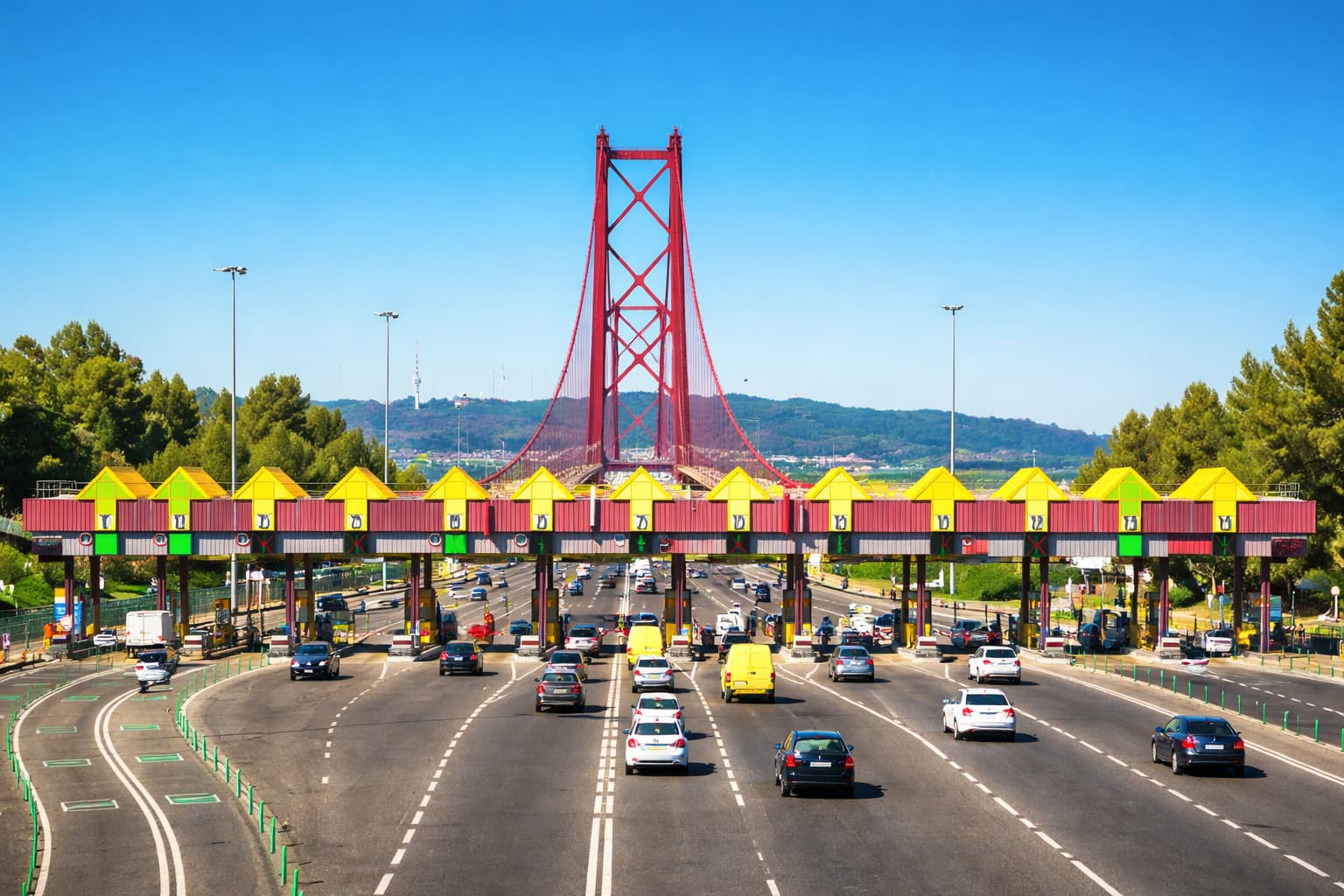
So this article is the no-stress version: what types of tolls exist, the easiest ways to pay as a tourist (especially with a rental car), and the small checks that help you avoid fees, missed payments, and general “what did I just drive through?” panic.
If you’re still choosing a car for Portugal (or comparing rental offers that include toll options), start here: compare rental cars
1) Two types of tolls in Portugal (know this and everything gets simpler)
Portugal’s official tourism portal explains it clearly: motorways have two distinct kinds of tolls—
- Conventional tolls with booths, and
- Exclusively electronic tolls (no booths).
A) Conventional tolls (with booths)
These are what most people expect: you either stop and pay, or use an electronic lane.
What it looks like:
- Toll plaza with multiple lanes
- Signs for cash/card lanes
- Dedicated electronic lanes (often associated with Via Verde)
B) Electronic-only tolls (no booths)
These are the ones that surprise travelers. You’ll see overhead gantries (cameras/sensors), you drive under them, and there’s no place to pay on the spot. The payment happens through a registered method (plate/card association, device, or prepaid system).
My quick rule:
If you didn’t physically pay and there was no booth—assume it was electronic and make sure you have a payment method active.
2) The easiest way to pay tolls as a tourist (especially in a rental car)
Option 1 (my favorite): Get a toll solution through your rental
Many travelers choose a rental option that automatically records tolls (often via a transponder / electronic service) and charges them later. Portugal’s official tourism site notes that the Via Verde system is available for foreign vehicles through Via Verde Visitors, a device that allows payment across toll infrastructures (including electronic toll lanes and bridges).
Option 2: Link your license plate to a bank card (EasyToll-style)
This is one of the simplest “set it and forget it” tourist solutions: you link your vehicle plate to a bank card, then tolls are debited after you pass toll readers. Portugal Tolls describes this exact approach and notes it works with Mastercard/Visa/Maestro.
Important detail many people miss: the Portugal Tolls page also mentions:
- Registration validity: 30 days
- A registration fee (example shown: €1) and an administrative fee per journey (example shown: €0.32)
- It’s valid across the national highway network except crossings managed by Lusoponte (25 de Abril and Vasco da Gama bridges).
Official info link: Portugal Tolls (official) (https://www.portugaltolls.com/en)
Option 3: Prepaid TollCard (good for controlled budgets)
If you prefer a prepaid balance, TollCard is another commonly used approach. The TollCard site explains activation is linked to the license plate and balance notifications are sent by text message.
CTT (Portugal’s postal service) also describes TollCard options with different top-up amounts for foreign plates.
Useful links:
4) The “I’ll pay later” method: why I don’t recommend relying on it
Yes, post-payment exists in some cases, but it’s easy to mess up as a visitor—especially if you’re in a rental and you’re not sure which roads were electronic.
Portugal Tolls’ FAQ notes that for Portuguese-registered vehicles (and when no toll device/service is used), tolls can be paid post-paid within 15 working days through CTT (store or online), with reference to the applicable ordinance.
Ascendi’s FAQ also describes a post-payment window where journeys become payable after about 48 hours and remain payable for 15 working days.
Why this can be risky for tourists:
- It’s easy to forget which day you passed which gantry
- With rentals, billing periods and your agreement period may not match neatly (Portugal Tolls explicitly warns about this mismatch risk).
- You might not have the right access / process ready while traveling
So if your goal is a calm trip, I’d treat post-payment as a backup plan—not your main plan.
5) My “before you drive” toll checklist (saves a lot of stress)
Before the motorway, I do a 60-second check:
Do I have a toll solution activated (rental toll service / card linked to plate / prepaid TollCard / Via Verde Visitors)?
If I’m using plate-to-card linking, is it valid for my travel period (often shown as 30 days on official info pages)?
Do I know whether my route includes bridges or special crossings (some solutions may have exceptions mentioned on official pages)?
And if you’re booking a car right now, this is where it helps to compare rentals that clearly explain toll handling up front: compare rental cars
FAQ what people ask
Are toll roads common in Portugal?
Yes—Portugal has a developed motorway network and tolls are standard on many motorways, using either booths or electronic-only systems.
Can I link my plate to a bank card?
Yes—Portugal Tolls describes a solution where the vehicle number plate is linked to a bank card and tolls are later debited after passing toll readers.