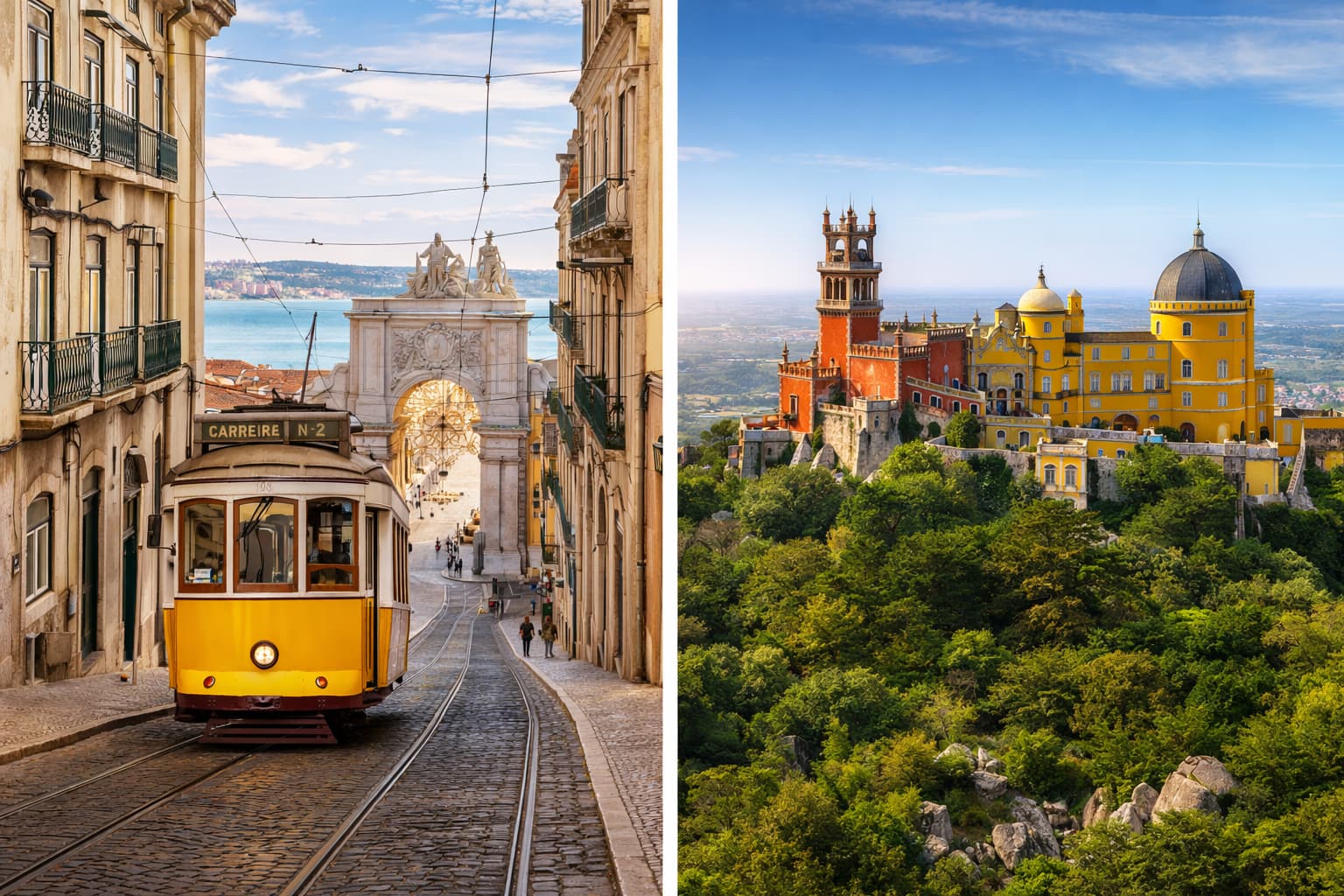
Arriving in Lisbon: what to do at LIS Airport (before you start sightseeing)
Landing at Humberto Delgado Airport (LIS) is refreshingly simple compared to many European capitals—Lisbon’s airport is close to the city, so you can be checked in and exploring fast. Use your first 20–30 minutes to set yourself up for a smooth trip: get connected (SIM/eSIM), decide how you’ll get into the center, and think about whether you want the flexibility of day trips outside Lisbon.
If you plan to explore beyond the city—Sintra, Cascais, beaches, or countryside viewpoints—a car can make your schedule much easier (especially for families or groups). To keep costs under control, it’s smart to compare options before you commit: you can compare car rental companies at Lisbon Airport on VerusCars and choose the best deal. Travelers often use aggregators like Kayak or EconomyBookings for quick comparisons—VerusCars is built for the same goal: helping you compare prices and pick the option that fits your budget and trip style.
Once you’re set, don’t rush straight into steep historic streets. The smartest first stop is a flat, scenic area that helps you reset after flying—then you’ll enjoy the hills later, when they’re actually worth it.
Top 10 places to visit in Lisbon (in the order you’ll naturally explore)
1) Parque das Nações
Parque das Nações is the perfect first Lisbon stop because it’s modern, open, and flat—exactly what you want right after a flight. Instead of immediately tackling cobblestone hills, you can walk by the Tagus River, breathe, and let Lisbon’s light do its thing. This area feels spacious and calm, and it gives you an easy “first photos” moment without effort.
If you want one family-friendly attraction that’s genuinely worth it, this is also where the Lisbon Oceanarium is located—an excellent option for kids, rainy afternoons, or anyone who wants a relaxed activity before the city’s intensity.
Best time: arrival day (late morning/afternoon).
2) Baixa & Rossio (Downtown Lisbon)
Baixa is Lisbon’s easiest neighborhood for first-time visitors because it’s structured, mostly flat, and naturally connects to everything. It’s the city’s downtown grid rebuilt after the 1755 earthquake—wide streets, classic façades, and a feeling that Lisbon is welcoming you rather than challenging you.
Start at Rossio Square, then wander along Rua Augusta. This is a great “warm-up walk” that doesn’t require planning: you’ll pass shops, cafés, and street life, and you’ll slowly get your bearings without feeling lost.
Don’t rush: Baixa is one of the best areas to simply walk and absorb.
3) Praça do Comércio (The grand riverside square)
From Baixa, it’s almost inevitable you’ll end up at Praça do Comércio—and that’s a good thing. This is one of Lisbon’s most cinematic places: a huge open square that frames the river and the sky like a stage. It’s also a great low-stress spot if you’re traveling with kids because there’s space to move, pause, and reset.
This is the place to slow down for a moment. Lisbon isn’t only about landmarks—it’s about atmosphere. Here, you can feel the scale of the river and the city’s light, which is part of why Lisbon photographs so beautifully.
Best time: late afternoon into golden hour.
4) Alfama (Lisbon’s most atmospheric old neighborhood)
Alfama is the Lisbon people imagine: narrow lanes, tiled walls, little staircases, and sudden viewpoints that appear when you least expect them. This neighborhood isn’t meant to be “completed.” It’s meant to be wandered—slowly, without a strict map—because the best parts are often the ones you don’t plan.
You’ll find small cafés, quiet corners, and the sense that Lisbon still feels lived-in. If you pass the Lisbon Cathedral (Sé de Lisboa), it’s an easy landmark stop, but the real magic is the neighborhood itself: sound, light, and texture.
Tip: plan Alfama for the late afternoon/evening when the city feels softer.
5) Miradouro: pick one viewpoint for a perfect sunset
Lisbon has dozens of viewpoints, and it’s tempting to chase them all. The better strategy is to choose one that matches your vibe and make it your “sunset moment.” That way it feels memorable instead of repetitive.
- Miradouro da Senhora do Monte: dramatic, wide panorama
- Miradouro das Portas do Sol: classic Alfama framing
- Miradouro de Santa Catarina: relaxed, social atmosphere
Arrive a bit early, bring a drink or snack, and let the city do the work. One great sunset viewpoint can become the highlight of your whole Lisbon itinerary.
6) São Jorge Castle (the view that makes Lisbon “click”)
If you want one “big” attraction that combines history and sweeping views, São Jorge Castle is the one. The castle isn’t just about walls—it’s about orientation. From here, you can finally understand how Lisbon fits together: the river curve, the rooftops, and the layers of neighborhoods.
Go early if you want calm and fewer crowds. Or go later for softer light (but more visitors). Either way, don’t treat this as a quick photo stop—this is the kind of place where sitting for ten minutes is part of the experience.
Best time: early morning (ideal) or late afternoon.
7) Santa Justa Lift + Chiado (classic Lisbon loop)
This section is classic Lisbon: elegant streets, a famous vertical lift, and the charming energy of Chiado. The Elevador de Santa Justa is iconic, but it often has long lines—so think of it as a “bonus,” not a must at all costs. The surrounding area is the real win.
Chiado is where Lisbon feels polished and relaxed: bookstores, cafés, and streets made for slow strolling. This is a perfect time for a proper coffee stop—especially midday, when the sun is high and you’ll appreciate shade.
Best time: mid-morning to afternoon.
8) Bairro Alto (evening atmosphere without overplanning)
Bairro Alto is best experienced in the evening, when the neighborhood becomes lively and social. You don’t need a strict plan here—just aim for a simple route, find a place for dinner, and enjoy the vibe. It’s a great “end of day” area because it feels like a reward: energy, lights, and streets that come alive after sunset.
If you prefer something calmer, you can combine Chiado + Bairro Alto lightly, then finish with a viewpoint or riverside walk instead. Lisbon works well when you design nights around atmosphere rather than “more attractions.”
Best time: after dinner until late.
9) Belém (Lisbon’s monuments, history, and riverfront)
Belém deserves its own half-day because it’s one of the most iconic parts of Lisbon and has several major landmarks close together. It’s also flatter than central Lisbon—good for families, slower walkers, and anyone who wants a break from hill climbing.
The essentials:
- Jerónimos Monastery (a true highlight)
- Belém Tower (iconic riverfront scene)
- Padrão dos Descobrimentos (great for understanding Portugal’s maritime era)
Belém is also a great place for a “walk-and-snack” afternoon along the river. This is where Lisbon feels open, breezy, and spacious—perfect for a slower pace.
Best time: morning (to avoid peak crowds and heat).
10) LX Factory (creative Lisbon to end your trip)
After monuments and historic streets, end with something modern and fun: LX Factory. It’s a creative zone filled with cafés, restaurants, shops, and street art—flexible enough that it works for any travel style. You can browse for 30 minutes or settle in for a long meal; it adapts to your energy.
LX Factory is also one of the best places for souvenirs that don’t feel generic—books, local brands, design goods—and it’s an easy “final evening” spot that feels relaxed after a busy day.
Best time: late afternoon into dinner.
Suggested 2–3 day Lisbon itinerary (easy to follow)
Arrival day: light + scenic
- LIS Airport setup → Parque das Nações
- Check-in (Baixa/Chiado recommended)
- Baixa & Rossio stroll → Praça do Comércio
- Evening wander in Alfama
- Sunset viewpoint (pick one miradouro)
Day 1: classic Lisbon
- Morning: São Jorge Castle
- Late morning: Chiado + Santa Justa area
- Afternoon: flexible (shopping, cafés, museums)
- Evening: Bairro Alto atmosphere (or a calmer riverside night)
Day 2: Belém + modern Lisbon
- Morning: Belém monuments
- Midday: riverfront walk + snack
- Late afternoon/evening: LX Factory dinner
Optional Day 3: add a day trip
- Sintra (palaces and gardens) or Cascais (coastal town vibe)
Practical Lisbon tips that make everything easier
- Plan around heat: mornings for sights, afternoons for shade/rest, evenings for walks
- Wear grippy shoes: Lisbon sidewalks can be slippery
- Don’t overbook hills: one or two “big climbs” per day is enough
- Book key tickets early: especially for major monuments (season-dependent)
- One viewpoint is enough: pick a great one and make it memorable
FAQ
Is Lisbon good for families?
Yes—just plan smarter: include flat zones (Baixa, Belém, Parque das Nações), pick one main viewpoint, and avoid long midday climbs.